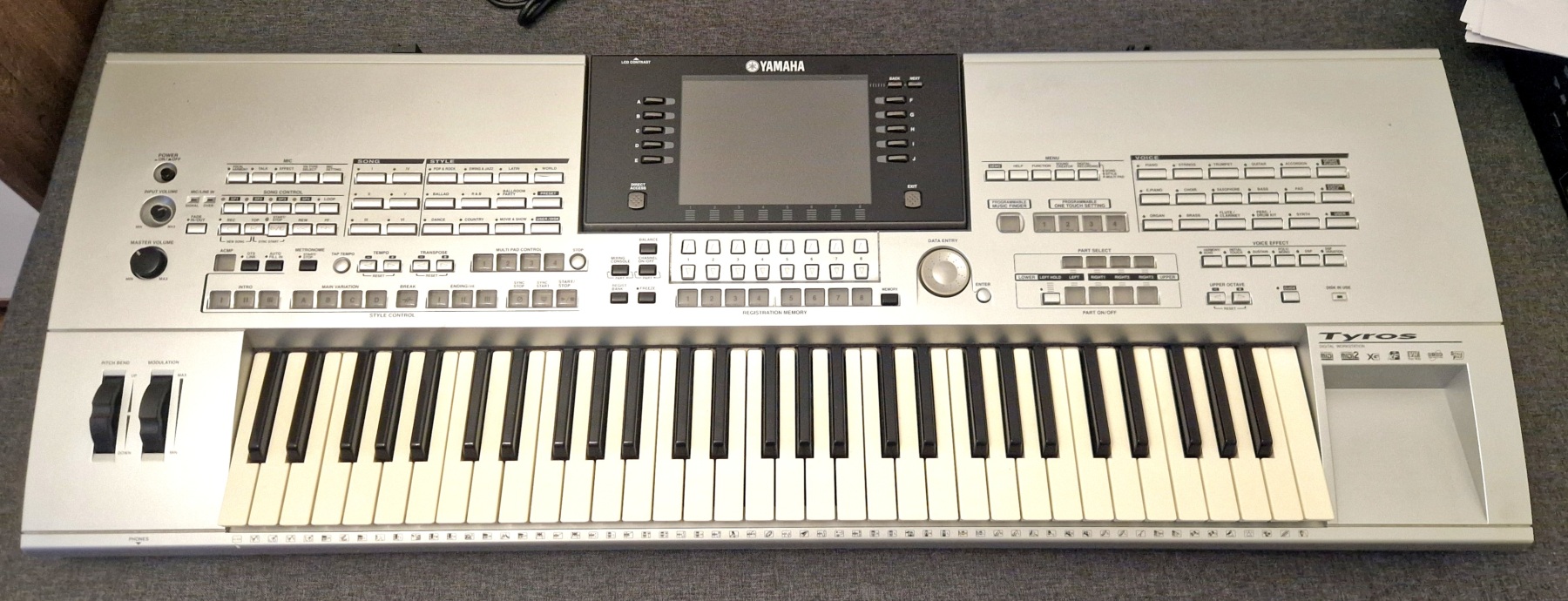
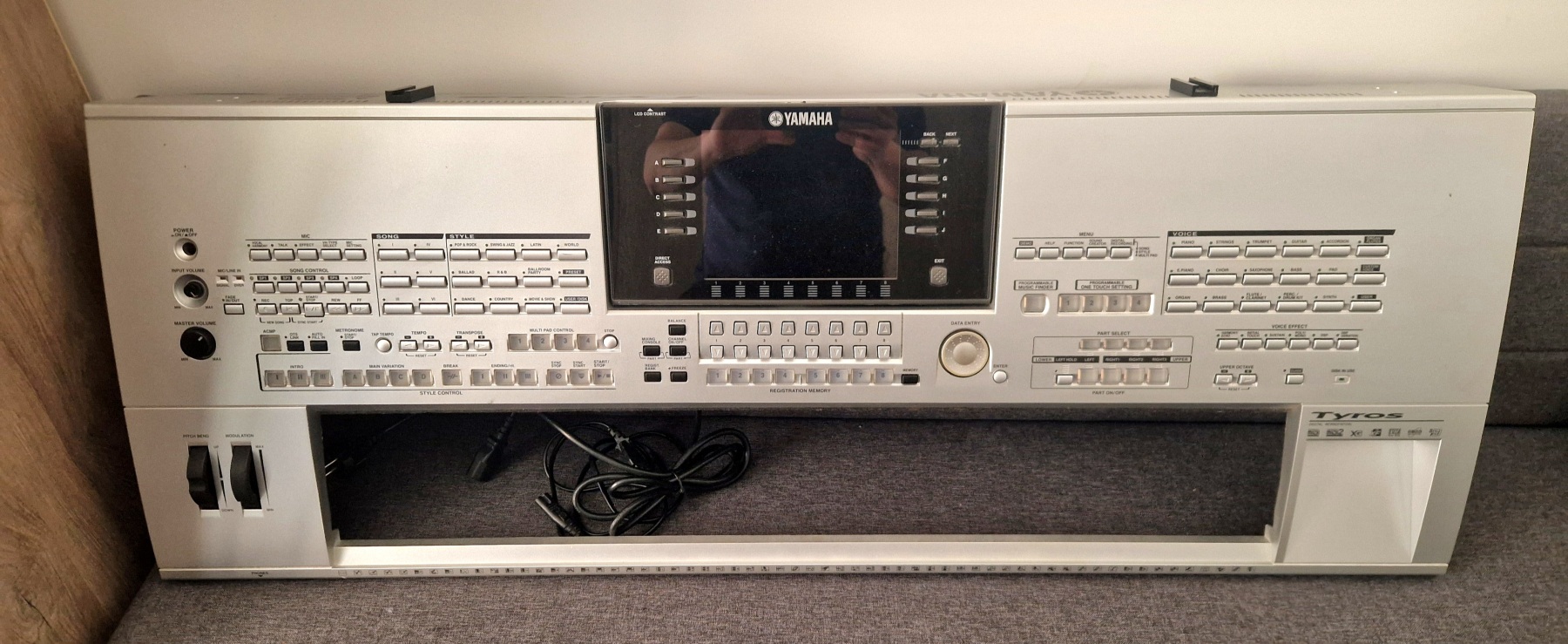
Yamaha Tyros 1
This time something unusual, because if you follow my repair work, you already know that I generally do not repair arranger keyboards — only synthesizers and other professional equipment (yes, yes, I know… I’m making myself unpopular). I accepted this one only because a long-time customer convinced me to take it in… and I immediately received a completely dead unit.
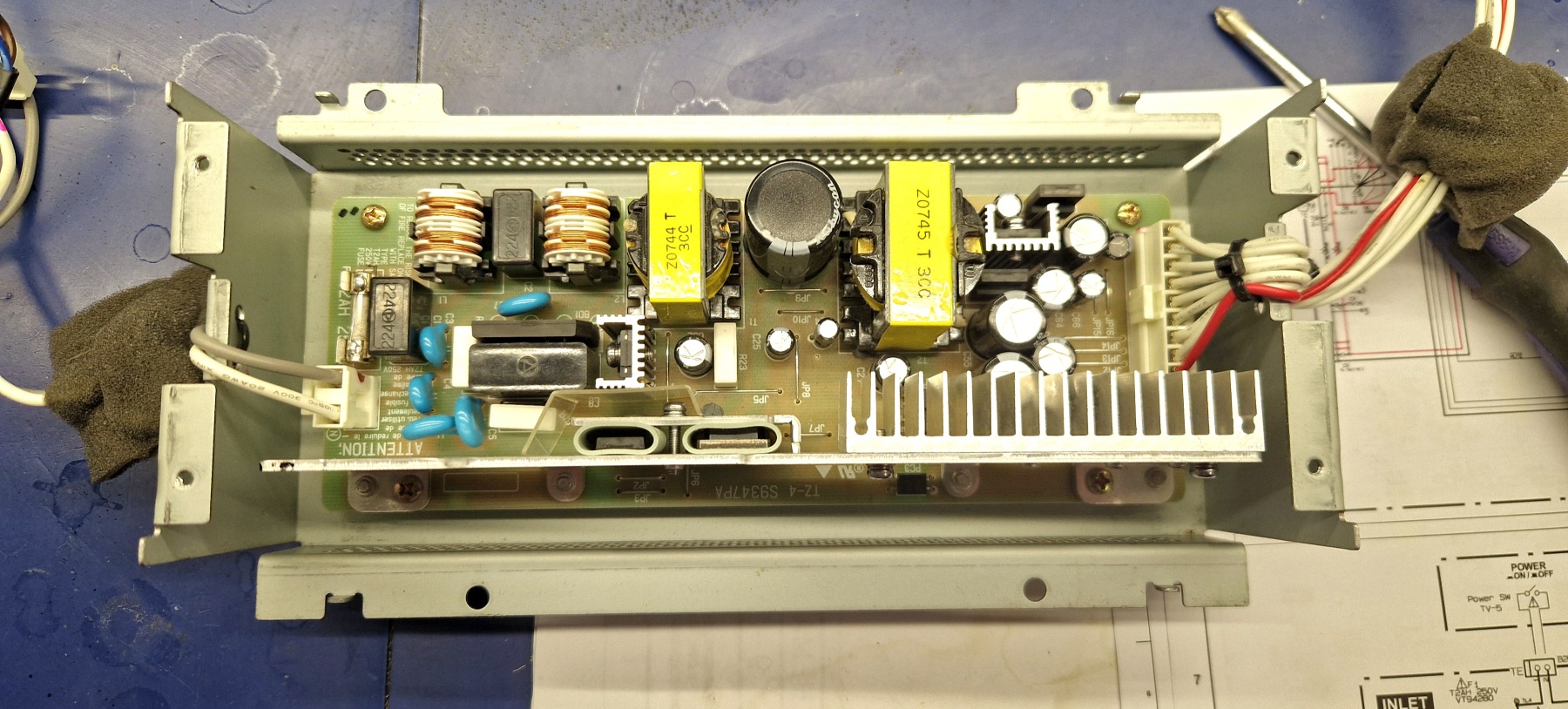
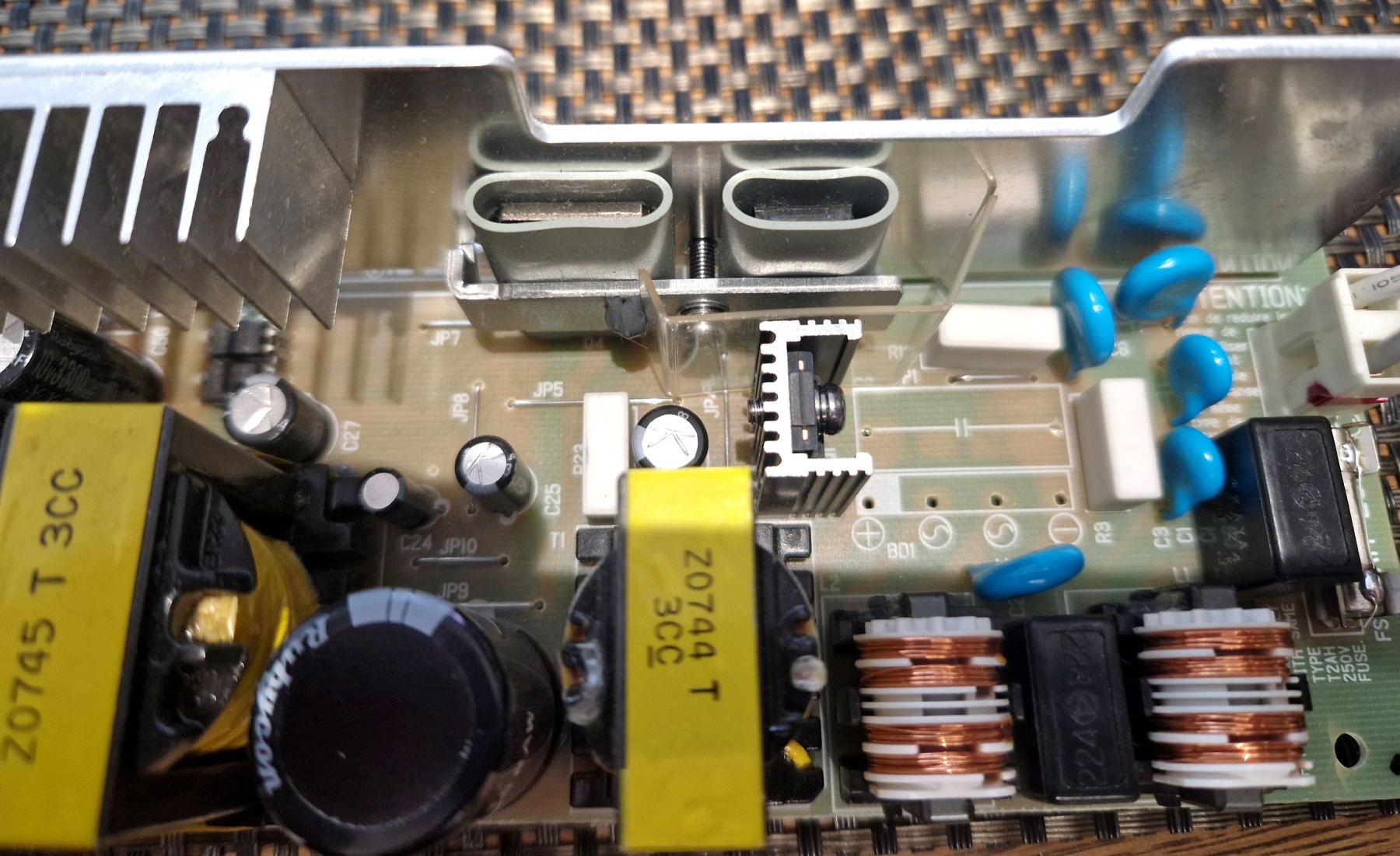
It turned out that the fault was caused by a fairly complex power supply module (a DC/DC converter) that was shorting out and blowing fuses. Unfortunately, Yamaha does not provide schematics for this module, and the unit itself is quite sophisticated, containing an exotic controller and a large number of semiconductors.
I identified two burned power transistors (they were causing the short circuit) along with several suspicious electrolytic capacitors, but even after replacing them the power supply still would not start. I suspected a damaged controller, but eventually decided not to continue repairing the original module.
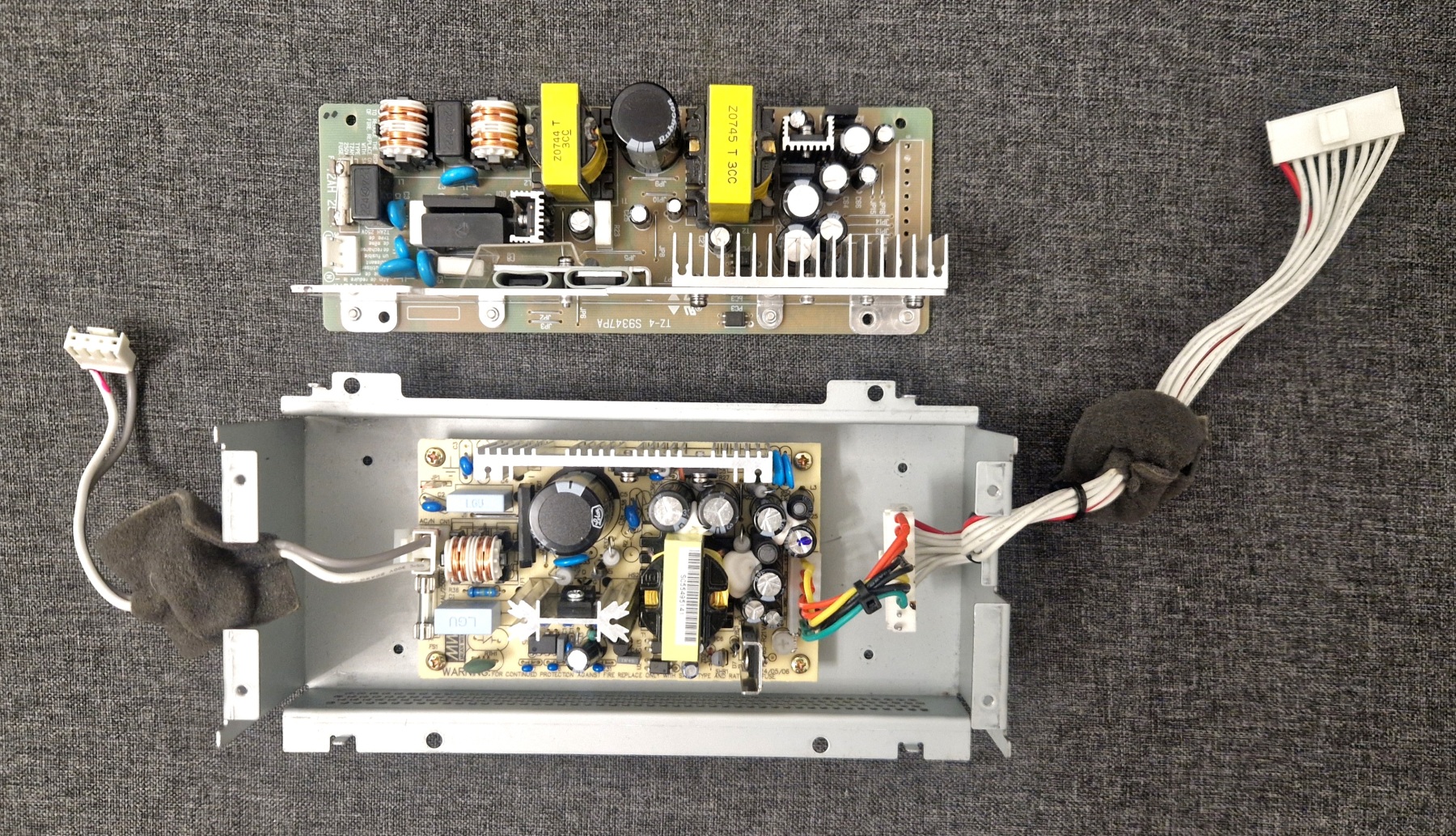
The owner searched for a used replacement, but the prices were absurdly high (around $150). Fortunately, from experience I know that replacing this type of universal module is usually not a problem, so I decided to go that route.
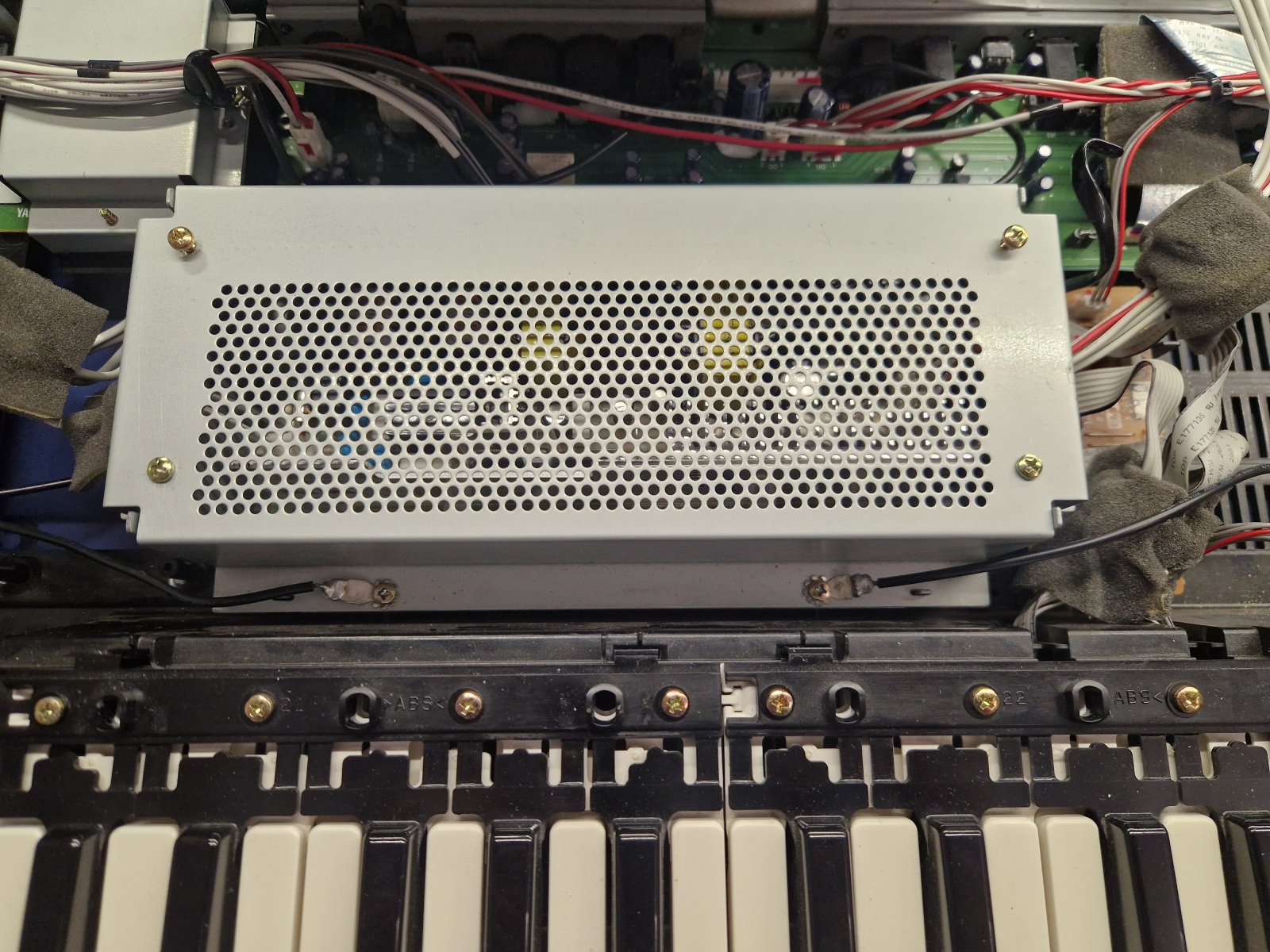
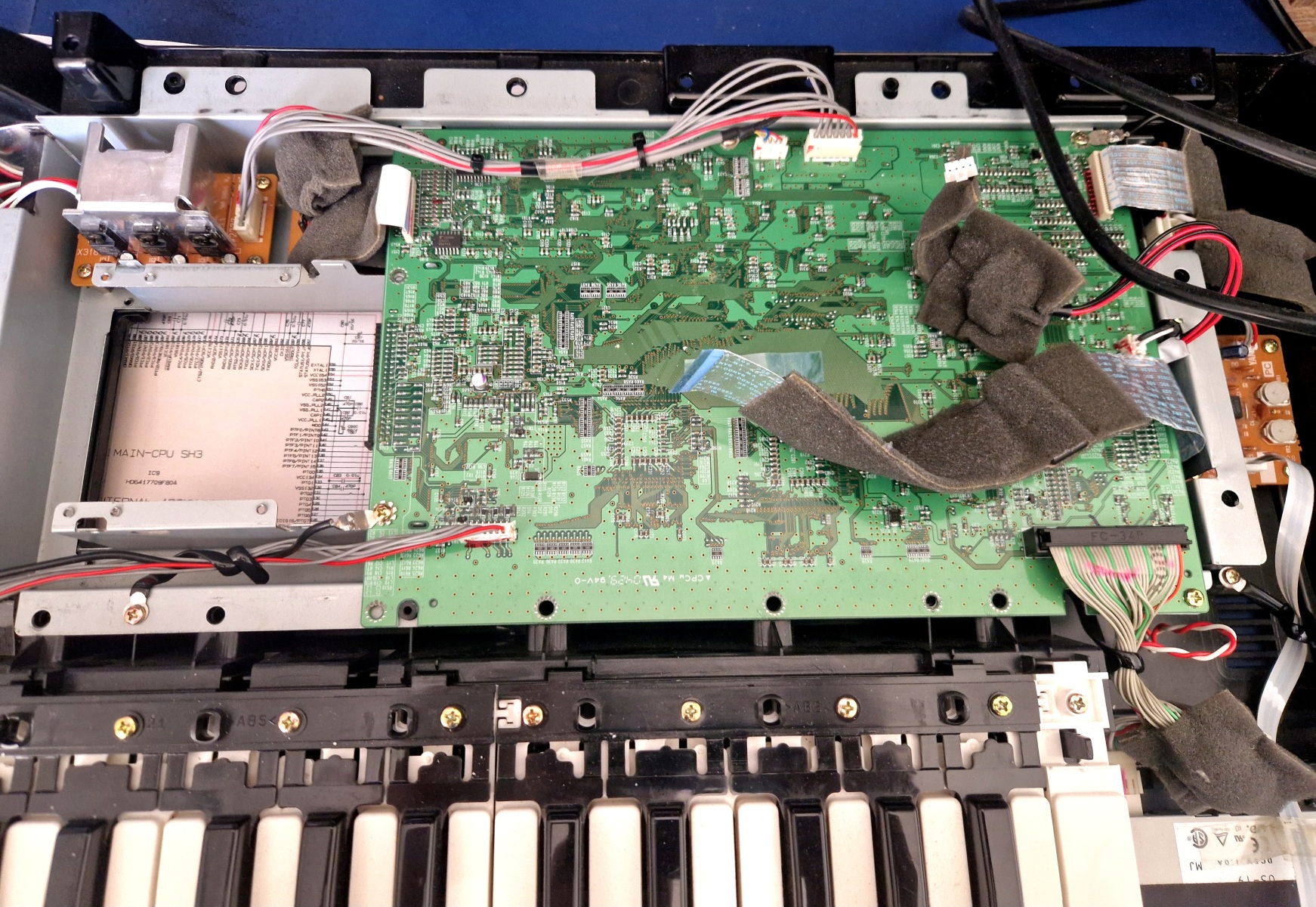
I bought a triple-output open-frame module made by Mean Well. Not only was it better built, smaller, and capable of delivering higher current, but it also cost only a fraction of the price of the used original module ($25). I installed it inside the original shielded enclosure and powered up the instrument.
But only halfway.
The Tyros was freezing on the Yamaha startup screen and would go no further. Worse still, it would not even reach that point every time it was powered on. On Yamaha forums, people often mention damaged Flash memory in such cases (I assume only the bootloader was starting), but I did not believe that was the real cause here.
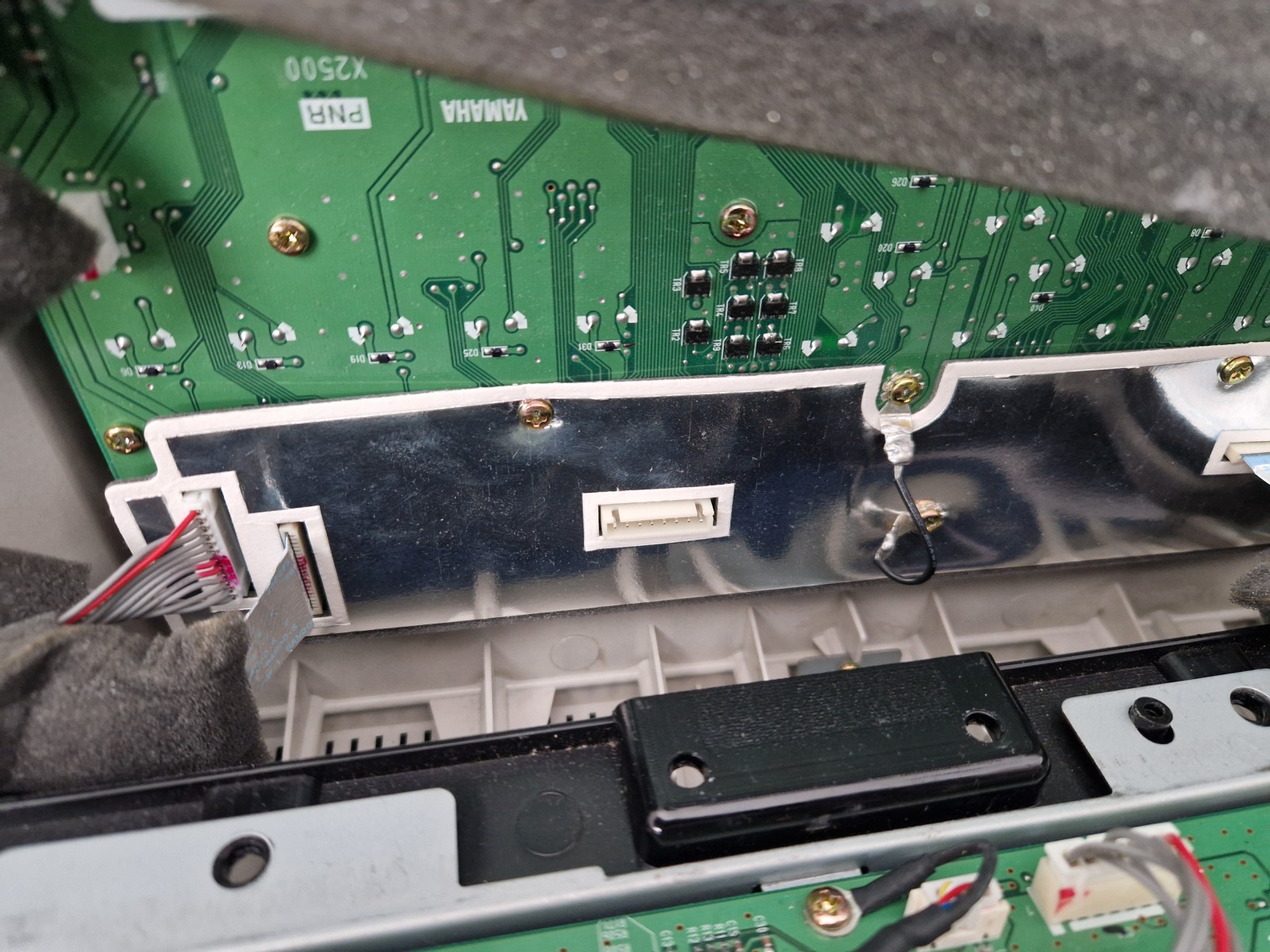
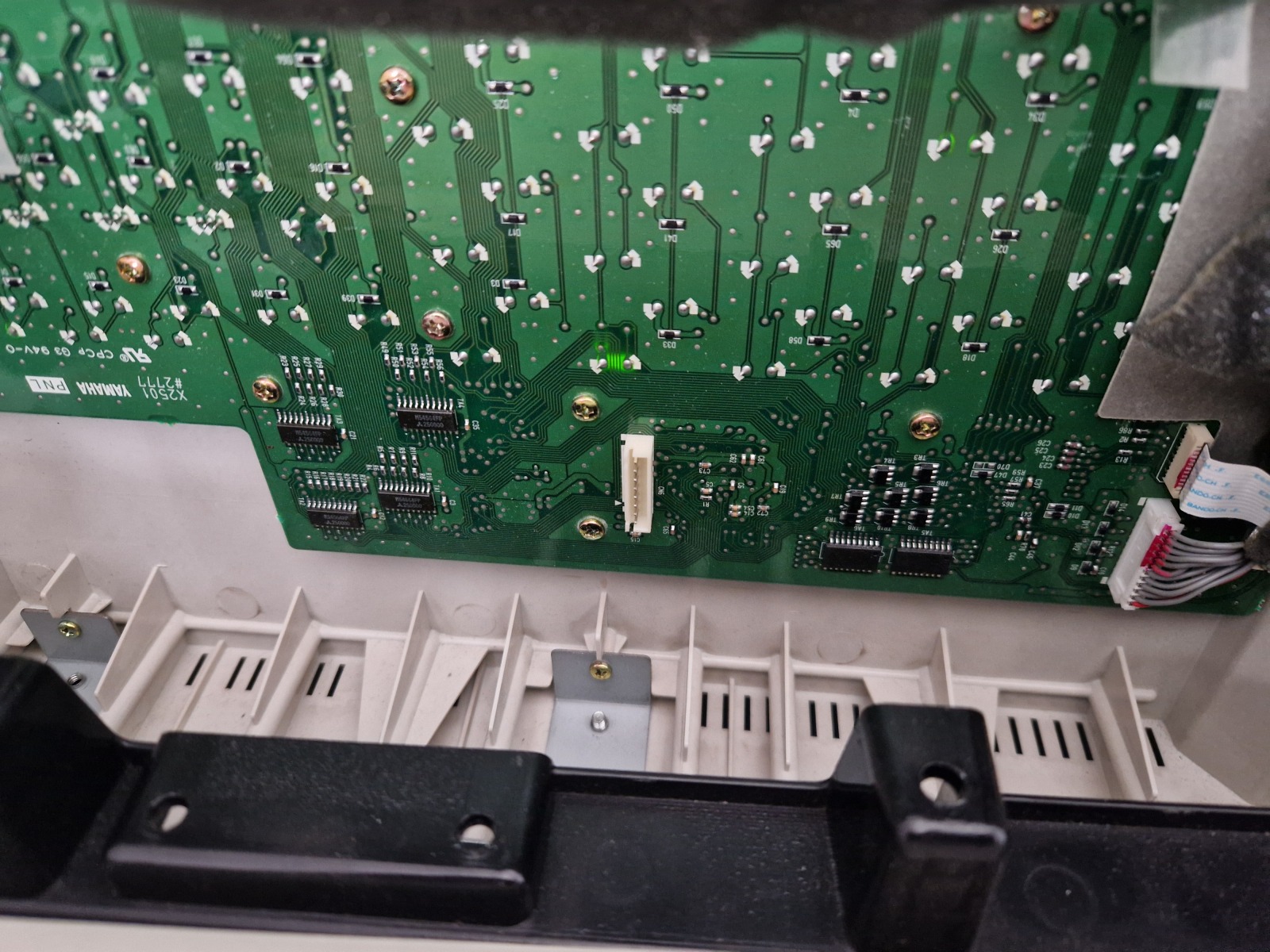
After taking measurements, it turned out that all power rails showed significant voltage fluctuations and spikes — typical symptoms of unstable voltage regulators and failing electrolytic capacitors. The mainboard contains four regulators, while another separate board contains three more.
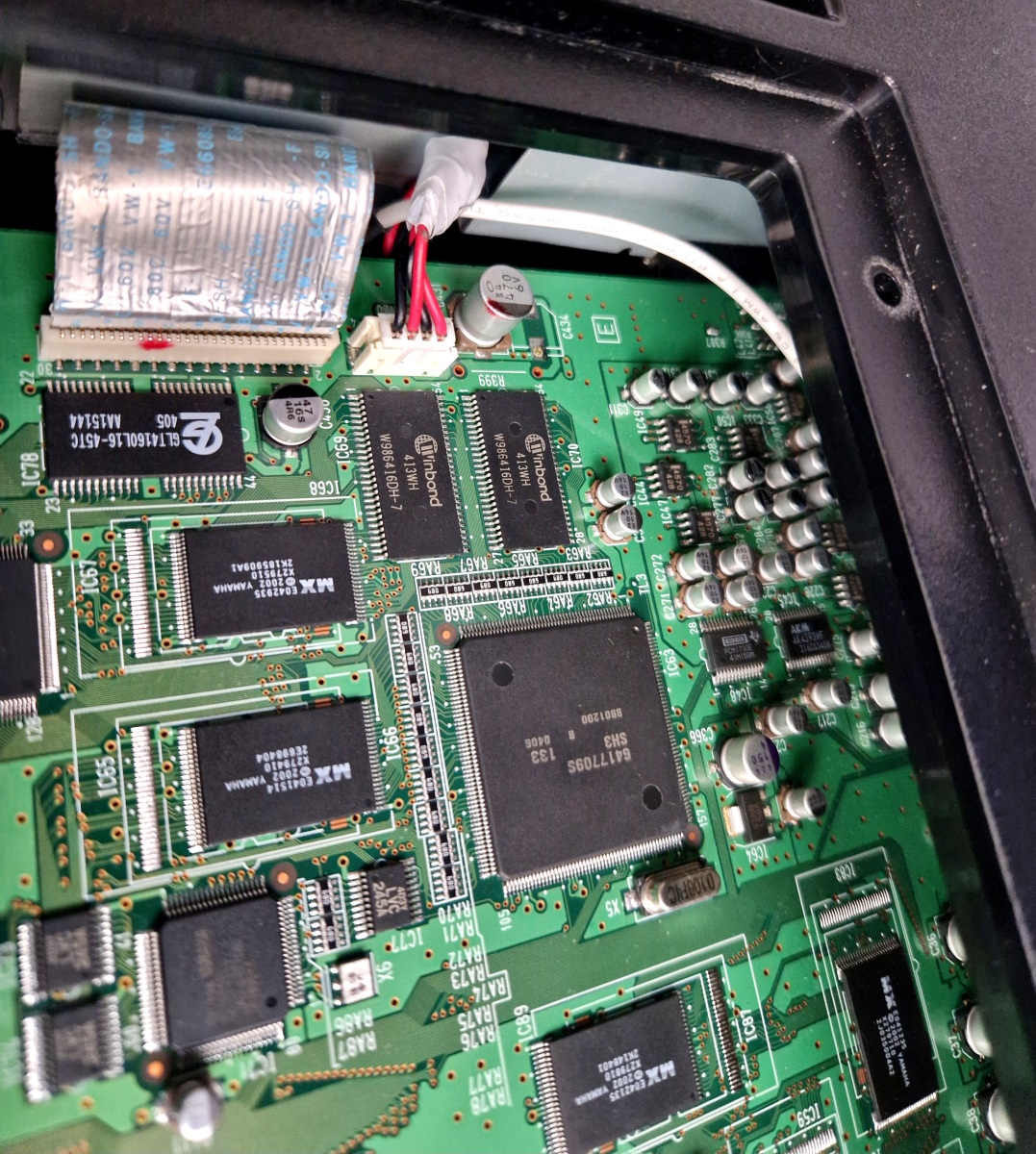
I replaced the key high-capacitance electrolytic capacitors near all regulators, the capacitor in the reset section, and then noticed something else: the mainboard had already been “repaired” before. Two additional electrolytic capacitors were missing, along with what I consider to be a crucial inductor supplying 5V to part of the motherboard. It had simply been desoldered and removed.
After restoring the missing components, the instrument started working as if nothing had ever happened.
I must admit, however, that its design is far from an engineering masterpiece and certainly does not inspire confidence in long-term reliability. For example, on the regulator board (the three input regulators, each running at 3.3V) Yamaha installed a relatively thick but physically small heatsink, because these components handle considerable current and become noticeably hot. Right next to them they placed all the supporting electrolytic capacitors — the same ones I had to replace because they had already dried out.
In any case, the instrument is now repaired, although I sincerely hope this was both the first and the last arranger keyboard to ever enter my workshop.