Korg Prologue
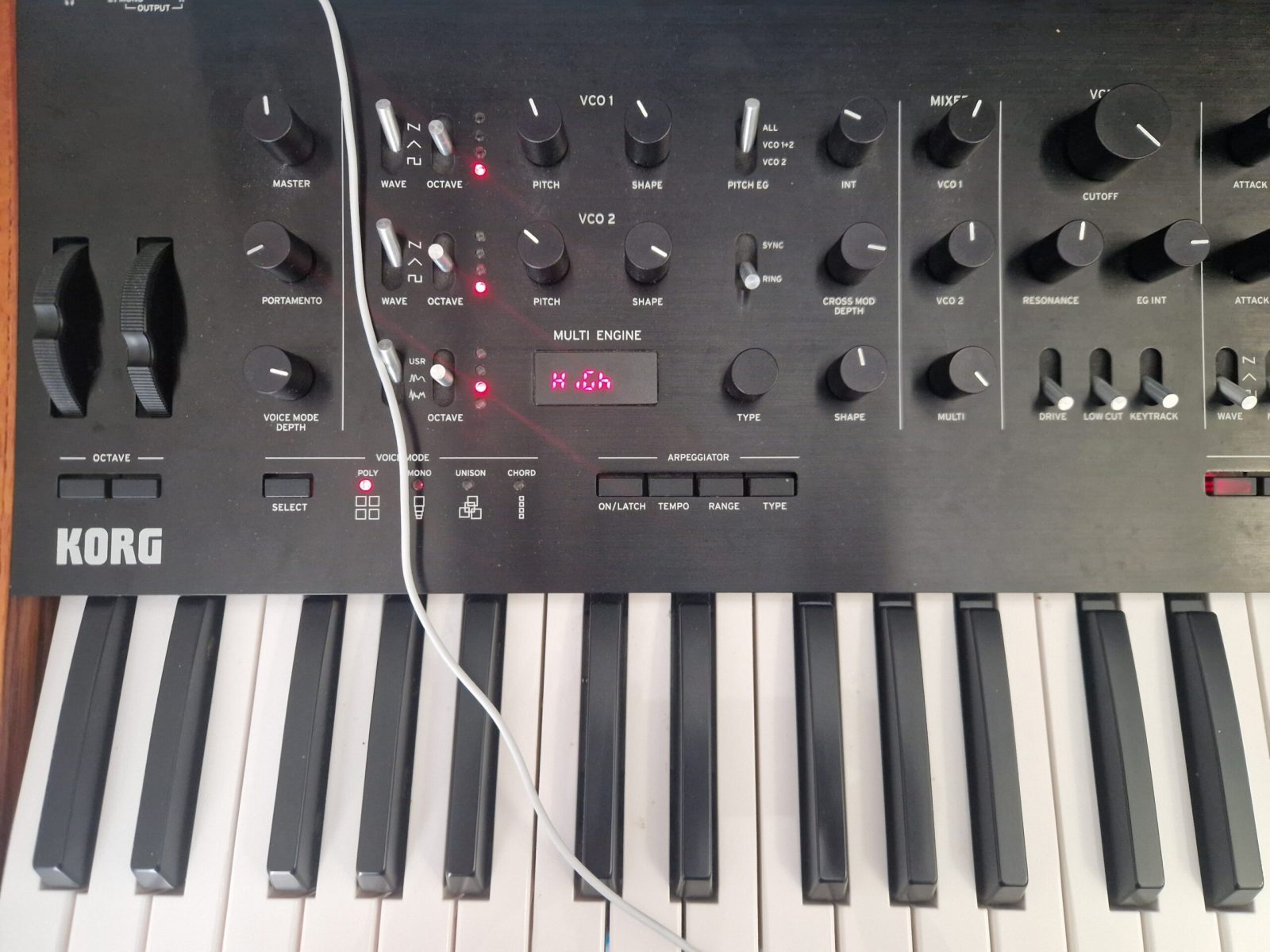
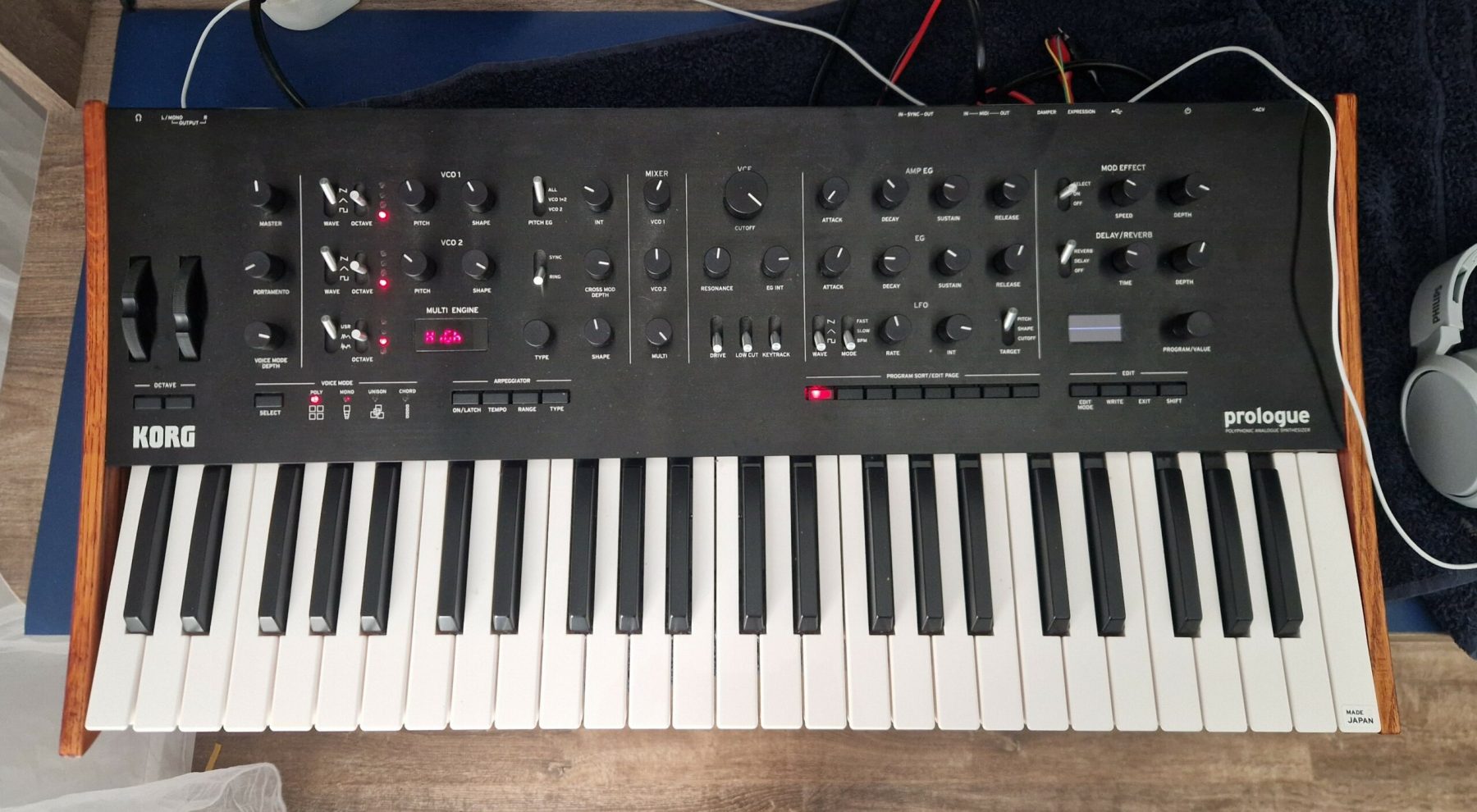
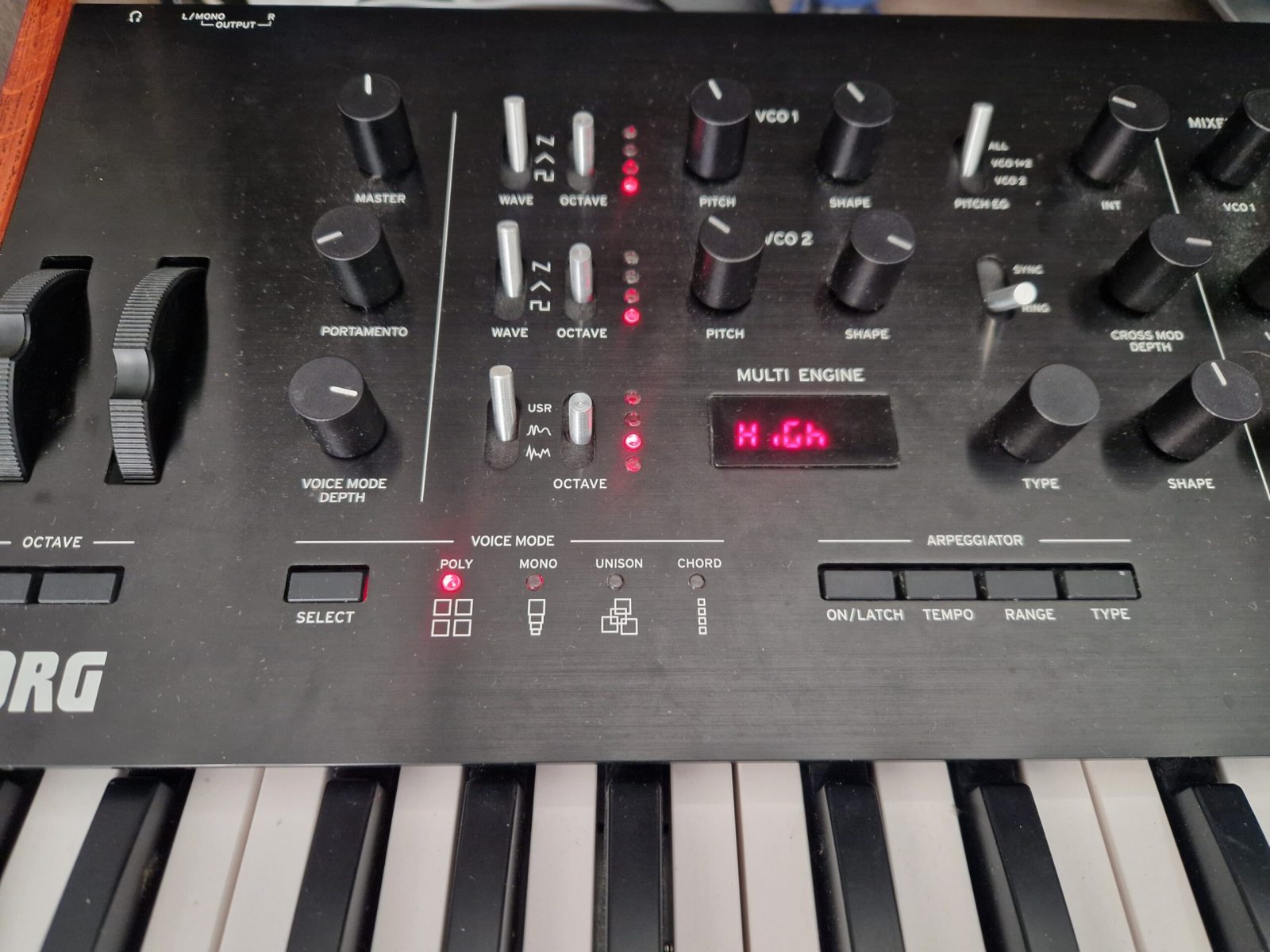
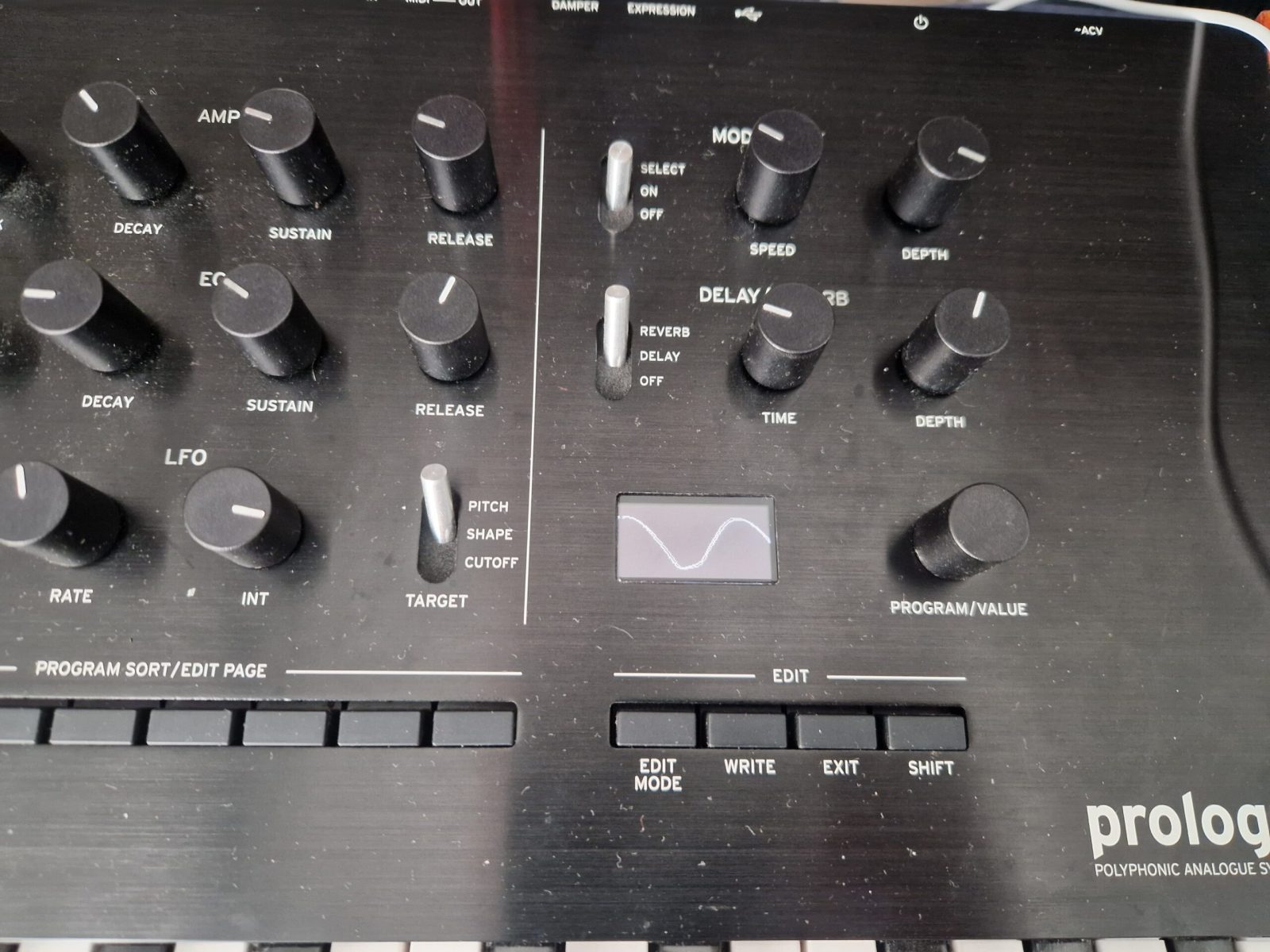
This time a quite unusual repair – or maybe not really a “repair” – of an interesting instrument: the Korg Prologue.
The synth was almost new, but completely dead (it would not power on). It had already been to an official service and came back with a diagnosis: mainboard needs replacement. Cost: over 1000 PLN, while the instrument itself is worth around 3000–4000 PLN.
So it came to me.
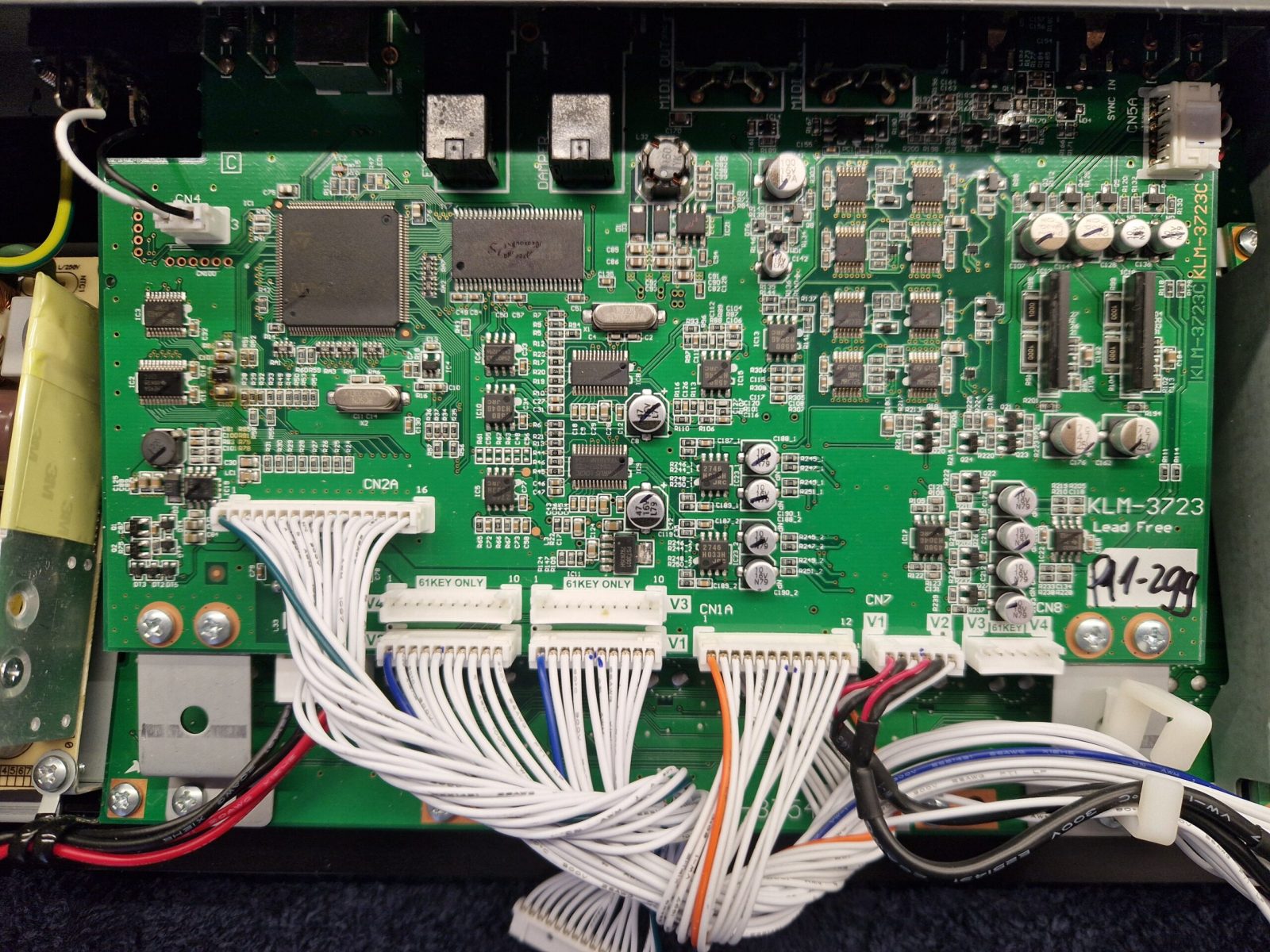
I started in the usual way: checking the power supply and all voltage rails (3.3V, 1.8V, 5V, ±12V, etc.). Very quickly it turned out that the 3.3V rail for the digital section was missing. The reason was a small voltage regulator (SOT-23 package) that had failed. Why the service didn’t check or replace it – I don’t know.
I replaced the regulator and the synth powered up… but only for a moment. The regulator went into thermal shutdown, the unit restarted, and this loop repeated. Why did the original regulator fail? Because the digital section was drawing about 2.5× more current than the regulator could handle (around 450 mA instead of max 200 mA). Where did this high current come from? From the main STM ARM processor, which was overheating and drawing too much current. According to the owner (information after the fact), the synth was hit during a strong thunderstorm. The CPU never really recovered. Most likely the internal protection diodes were damaged, causing a kind of partial short.
Since I don’t have access to replacement mainboards, what could I do?
I installed a much stronger 3.3V regulator in a TO-220 package with a heatsink and also added a heatsink to the microcontroller. Thanks to this, the synth came back to life. Will it last forever? Probably not. After 4–5 hours of operation, even this solution starts to struggle. But this was the best low-cost option, and the owner agreed to this compromise. How long will it work? Hard to say. It may run for years – or fail in a week, a month, or two. These are compromises, and I always clearly explain all options to the owner. Does the higher current stress other parts? No. The switching power supply has enough reserve and handles the extra ~200 mA without overheating.
The cost of this solution was only a fraction of the mainboard price.