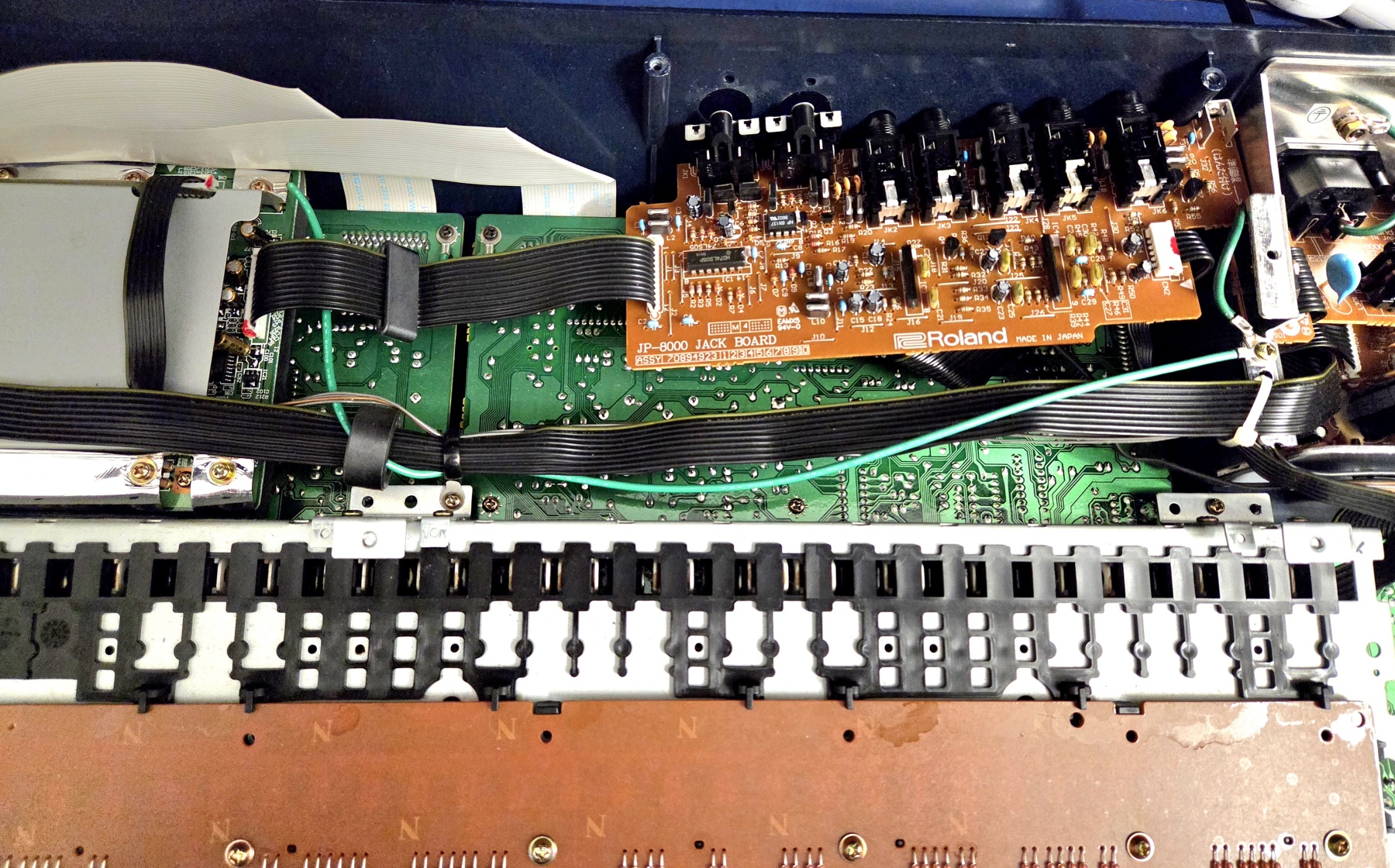
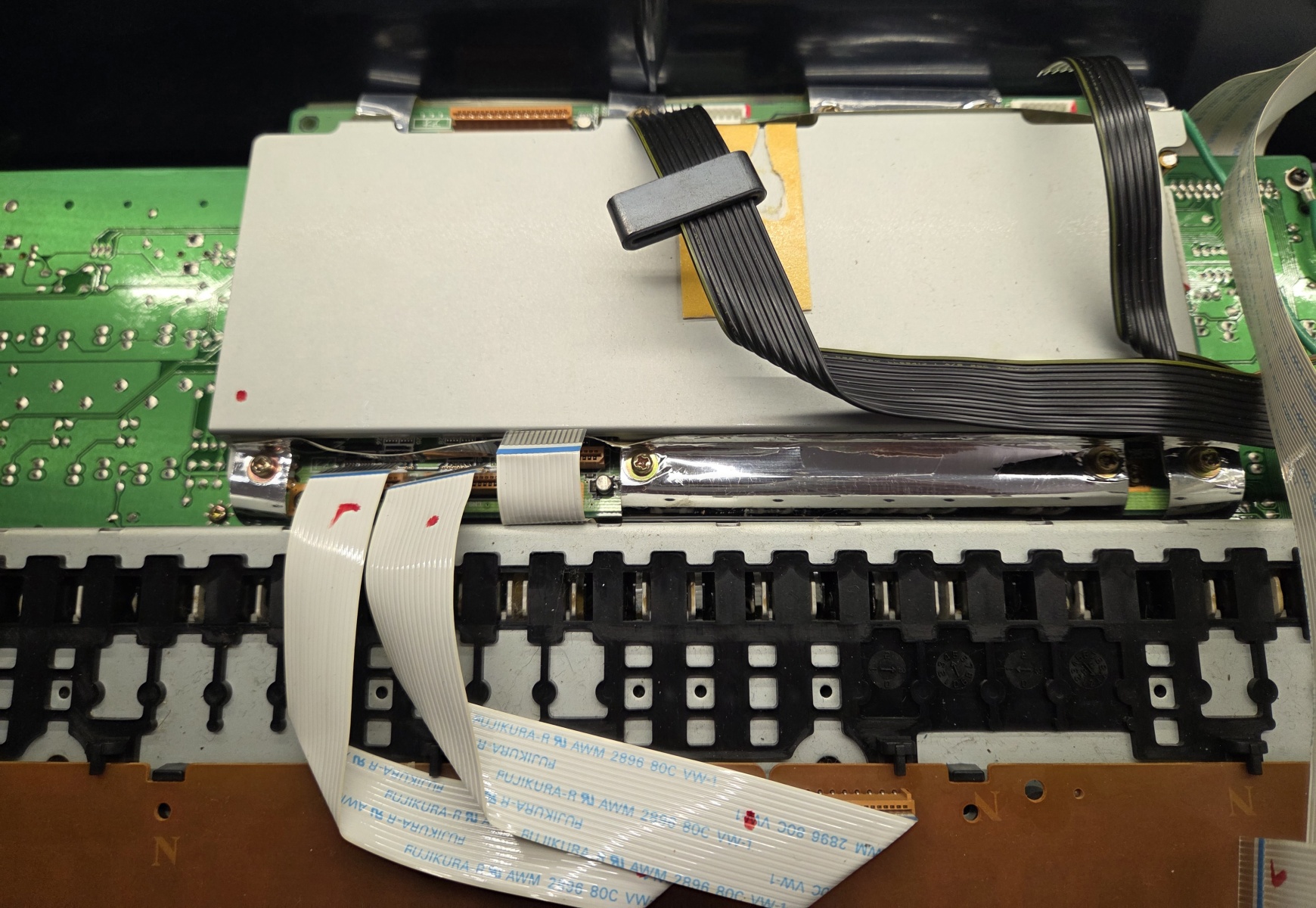
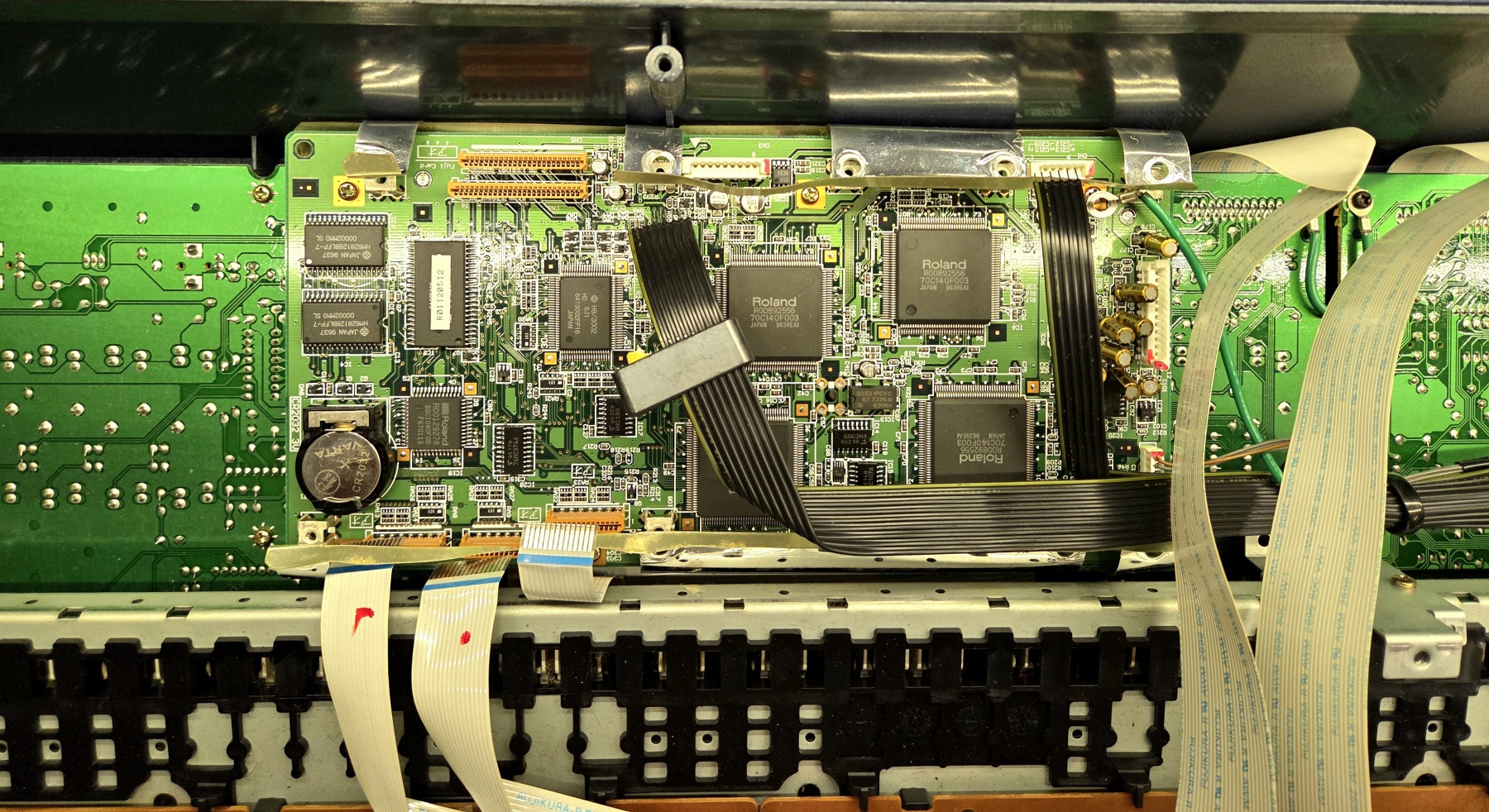
Roland JP-8000
Another instrument of this type has arrived at my workshop. It came to me with a diagnosis of low output signal levels (on both OUT and PHONES) and signal distortion at higher volume levels. My first thought was: the power supply or the electrolytic capacitors in the audio path.
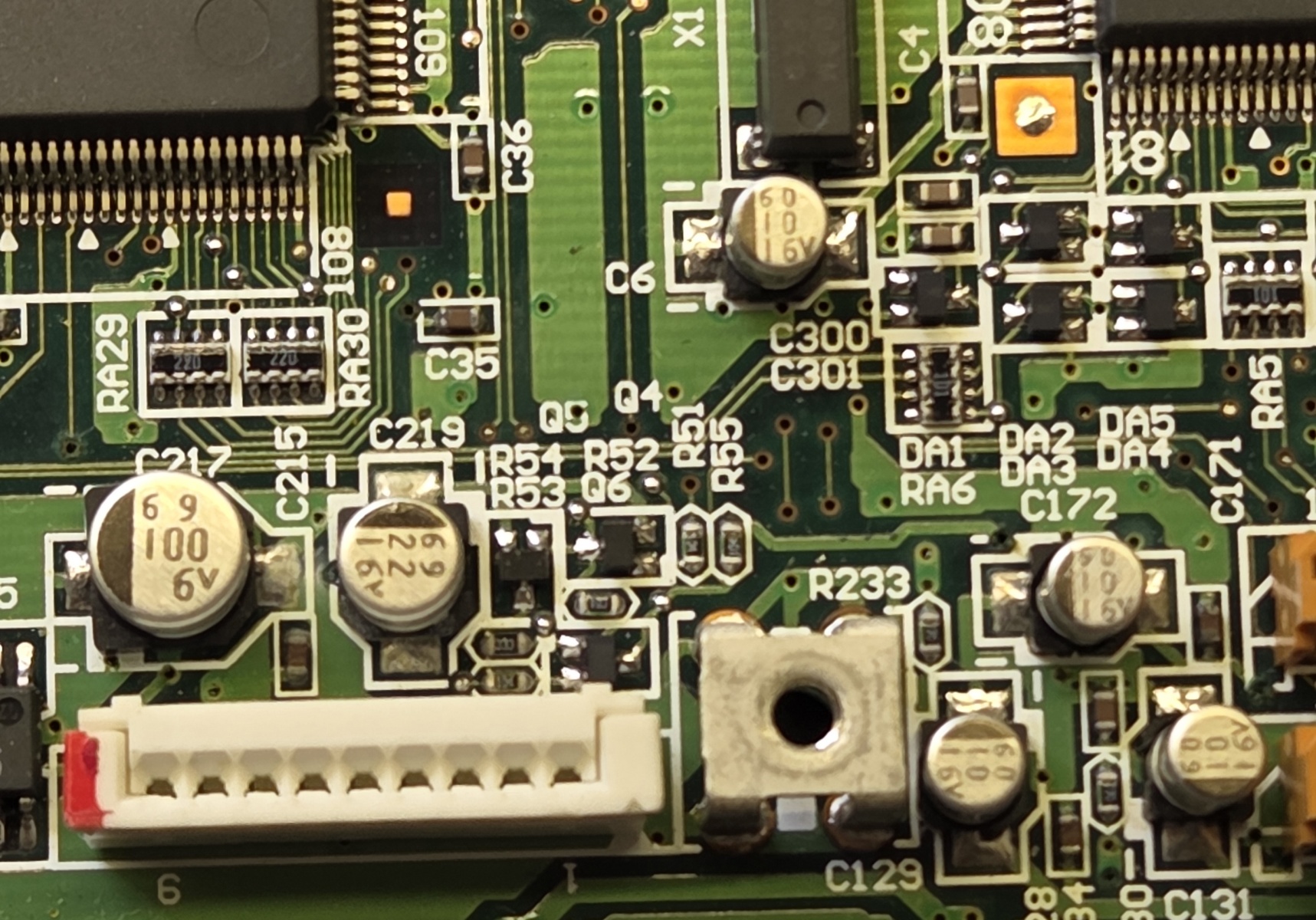
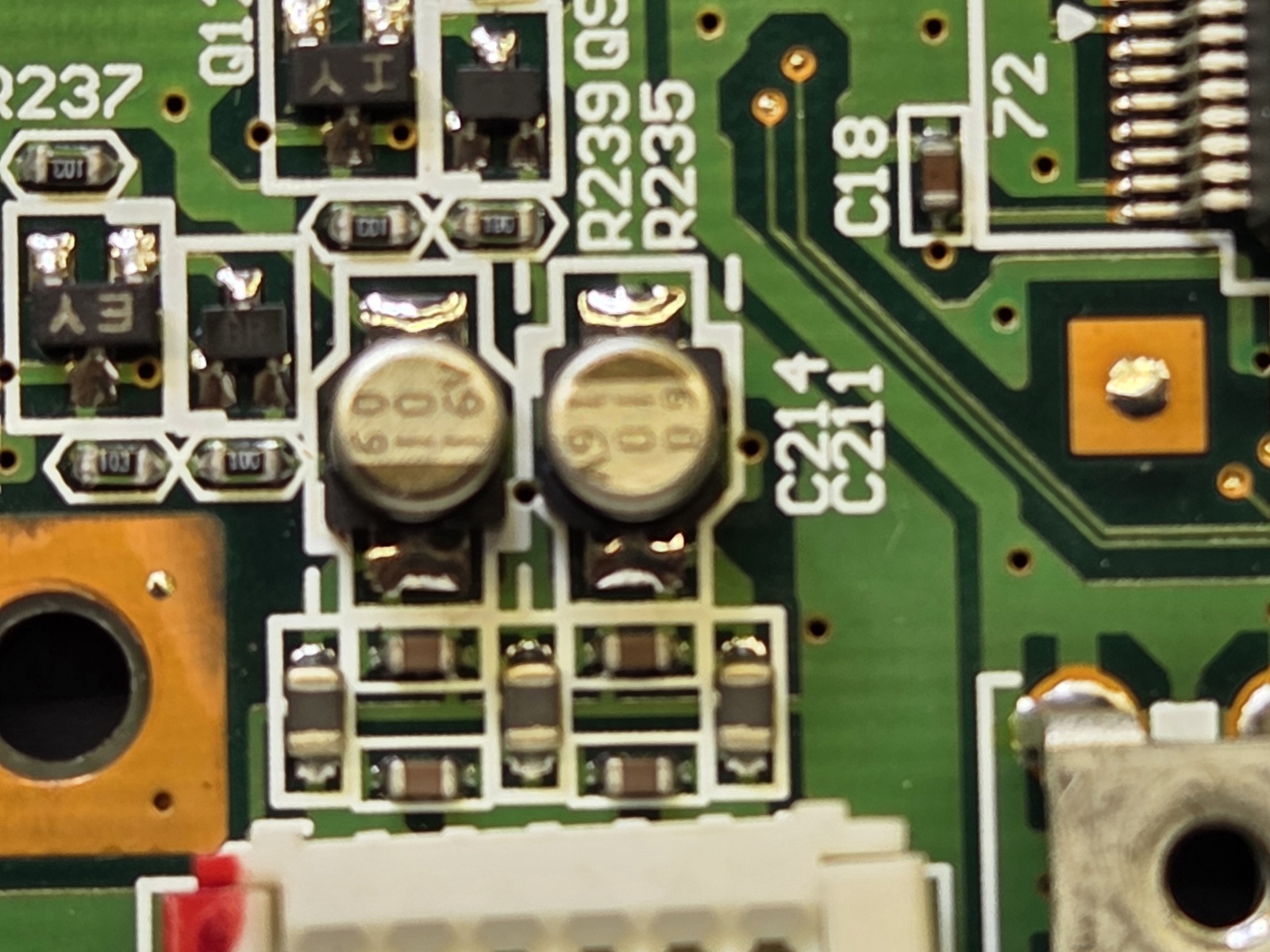
The reality turned out to be both simpler and more complicated. How is that possible? After opening the unit and measuring the voltages, I found that the power supply was fully functional. It also became clear that some of the SMD capacitors in the audio path had already been replaced with standard, good-quality through-hole (THT) capacitors. Unfortunately, this replacement work proved critical for the instrument.
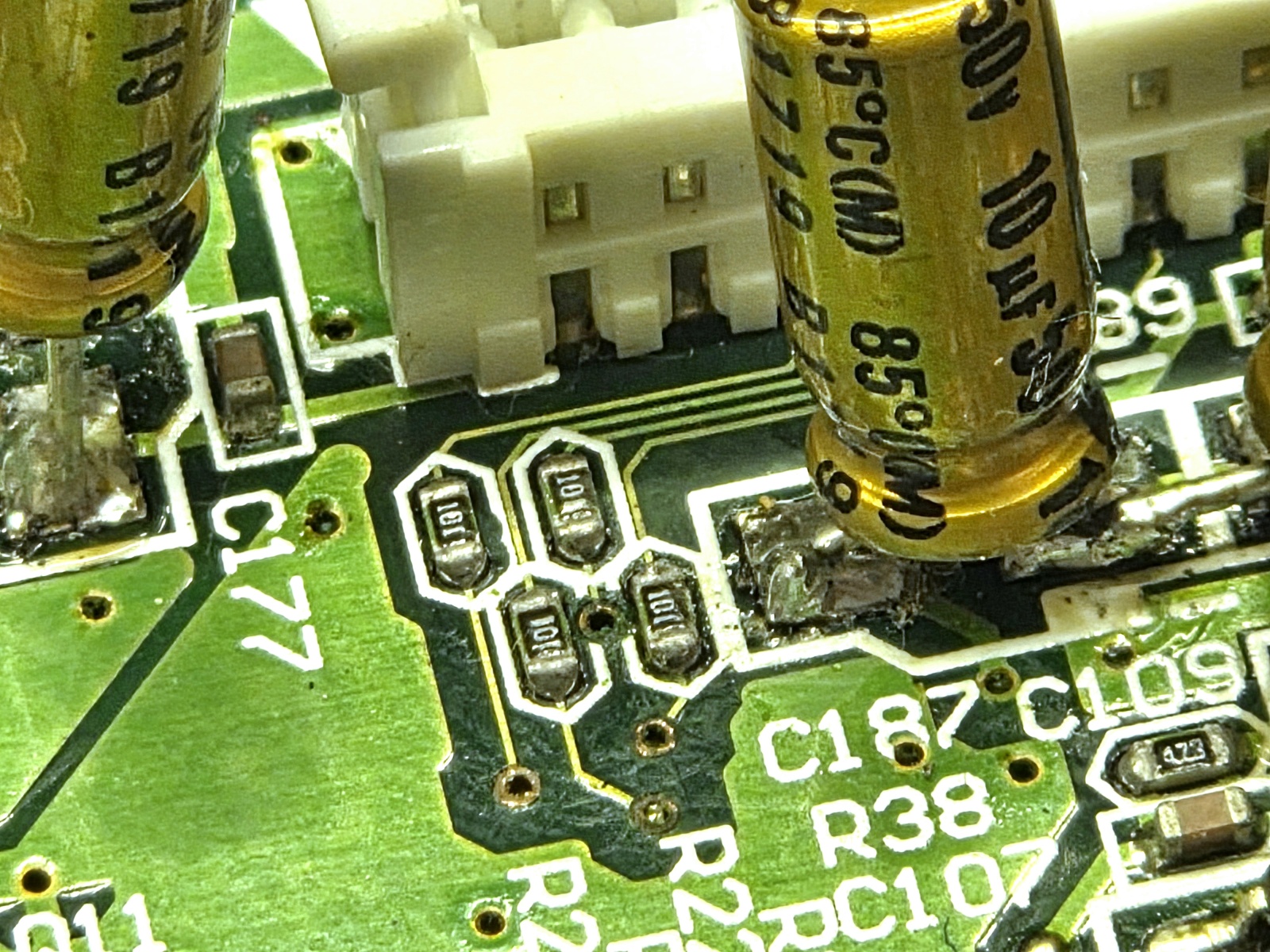
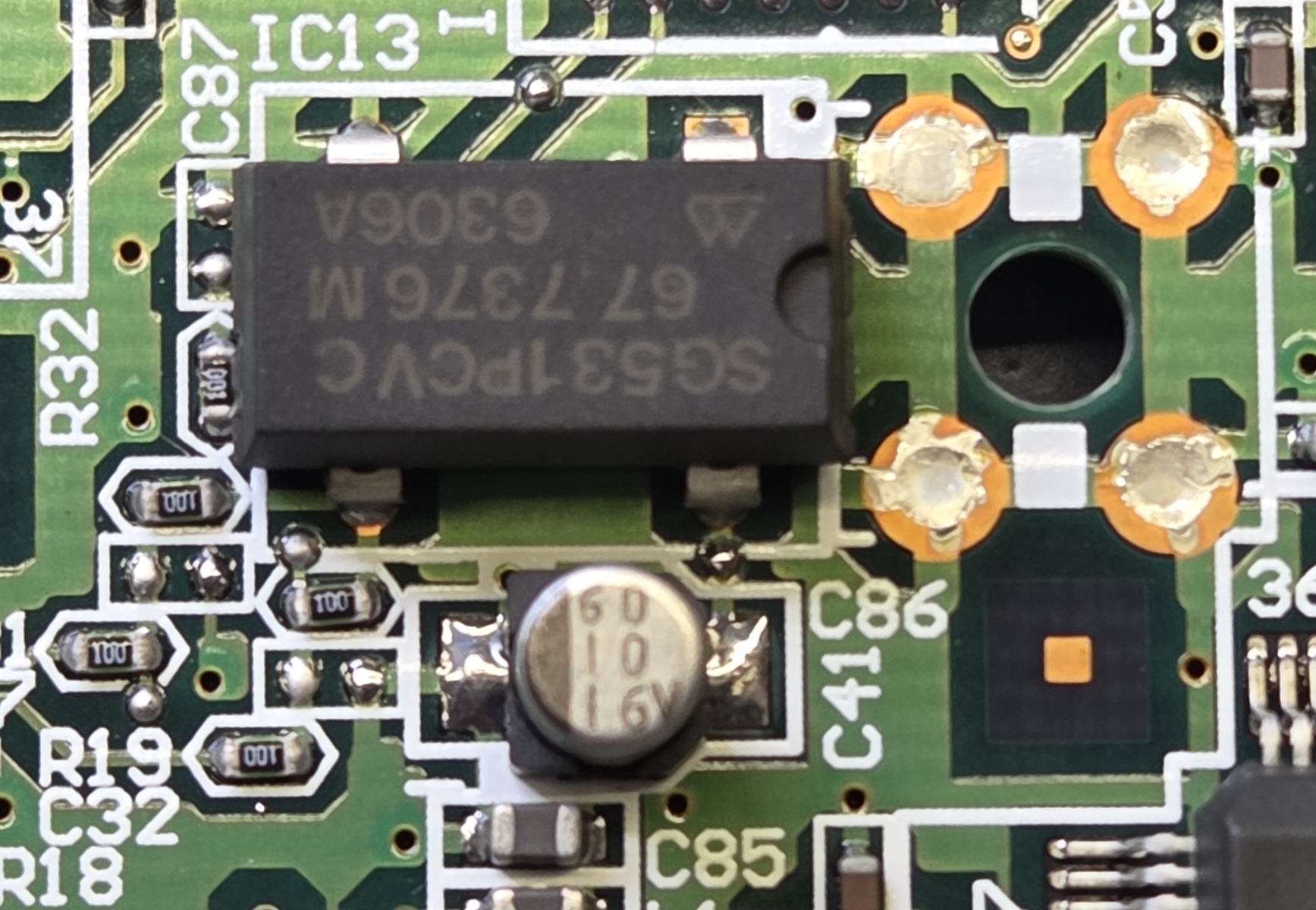
From experience, I know that SMD capacitors of this type can be tricky to desolder because their solder pads are small, largely hidden underneath the component, and the component itself may also be glued to the PCB. In other words, replacing them requires experience and care. In this case, some of the solder pads were overheated, causing both the pads and the PCB traces to lift off the board. In addition, some of the original SMD capacitors had leaked, and the electrolyte had seeped into the vias in the printed circuit board. Jumper wires had also been added to bypass broken traces. Overall, things were not looking good.
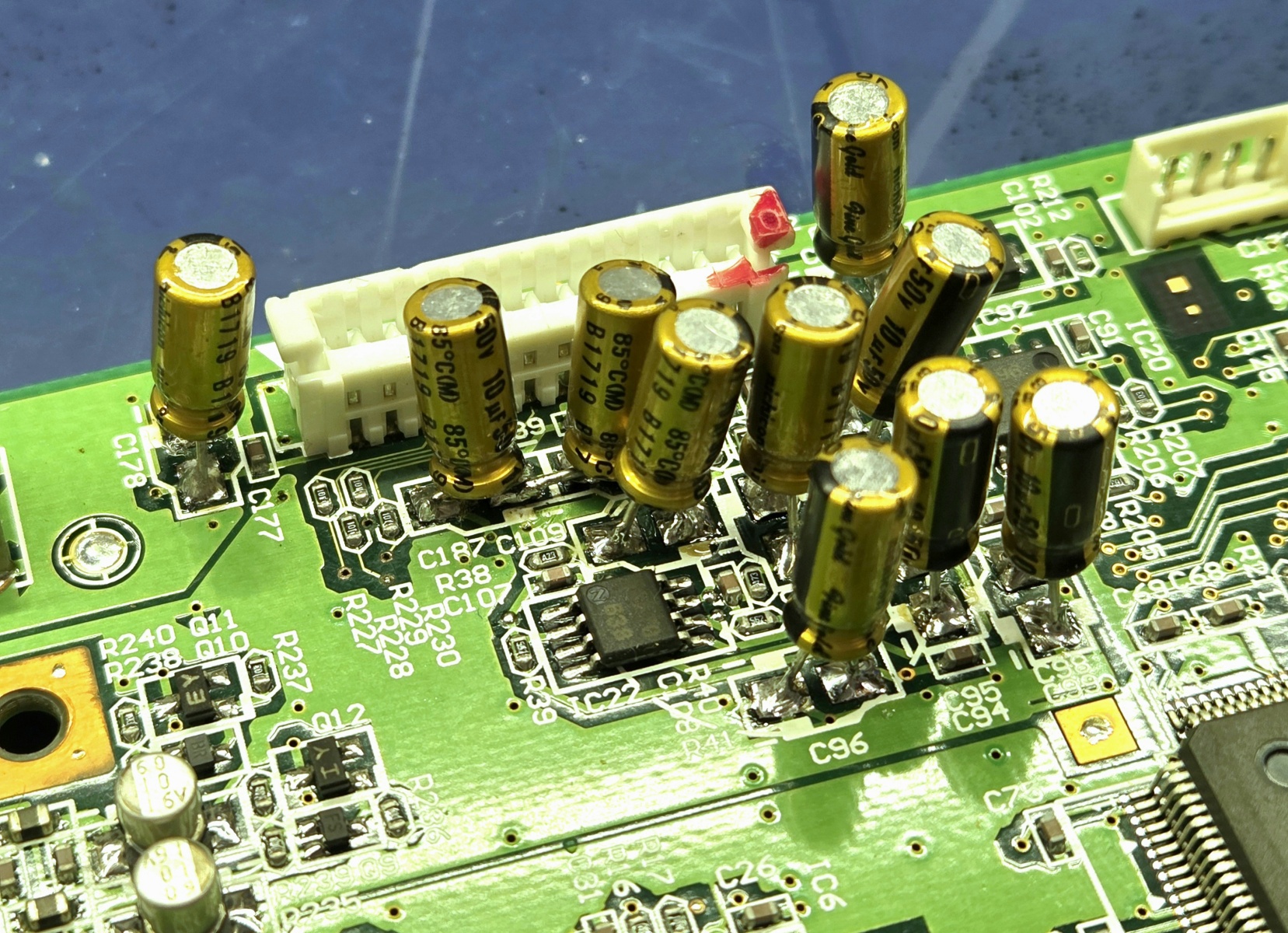
Like it or not, I had to remove all of this, clean the board to eliminate the areas contaminated by leaked electrolyte, and reinstall the THT components, resorting to what is commonly called a “wire hack” — something I really dislike. I also replaced the remaining capacitors of this type with THT components to protect the mainboard from further damage caused by leaking electrolyte.
But the most interesting part is that none of these issues was actually the cause of the fault. The signal attenuation and distortion were caused by the muting circuit… or, more precisely, by a single faulty electrolytic capacitor responsible for the circuit’s time constant. In other words, after the instrument was switched on, the muting circuit remained active (perhaps a little less effectively), continuously shorting its outputs to ground. That was the whole mystery.
This is, incidentally, a common fault in synthesizers. A circuit that does relatively little good (it prevents a “pop” at the output when switching on) but is very often the cause of malfunctions. Everything else was just an “extra” part of this repair, and it turned out to be the most difficult and least professional-looking part of the job.